

Everything doesn't need to make sense yet
Predictable thinking produces predictable work

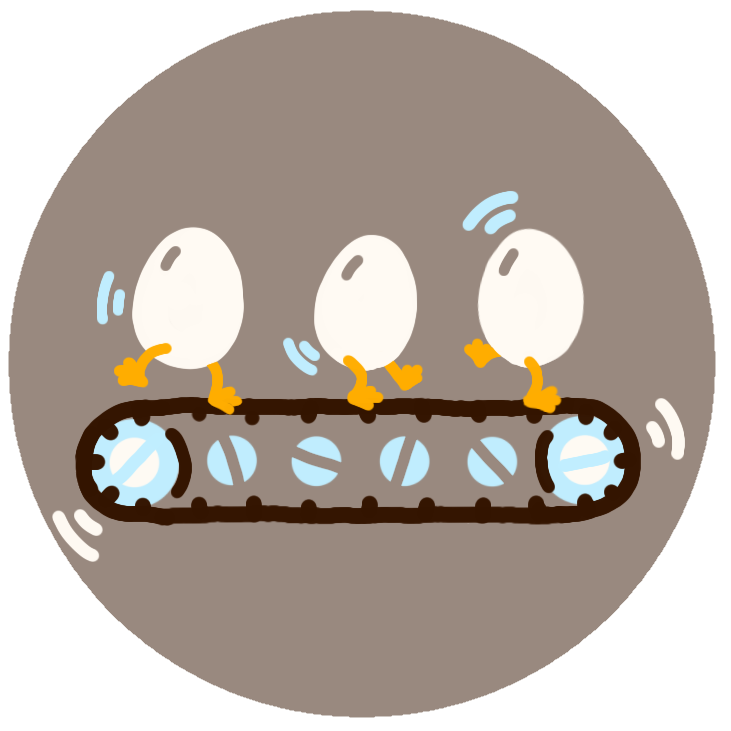
When teaching in the creative sector, and the reason I wanted to set up a creative charity that pushes against the norms, was that emerging creatives always want to know ‘the right path’. There is always commentary from graduates working in the creative sector who claim that ‘Art schools and college courses don’t teach what you need to know’ and while I have lots of criticism for the education system as a whole - I often found that young people just want a nice simple plan laid out, a ‘one size fits all’.
There can often be pressure in creative education to make things make sense too quickly. You’re shown a brief, taught a process, and encouraged to move quickly from idea to outcome as if the best work is the most efficient route between two points. It’s slick, ‘tick-boxy’, easily assessable, and it gives the impression of progress, however it also risks producing work that feels familiar and hackneyed.
There are better ways to push back at this thinking.
Not by rejecting structure altogether, but by rethinking what it means to learn. It isn’t about becoming better at delivering outputs and solutions, it’s about becoming someone who can let themselves be uncomfortable and unsure in the process. Someone who resists the urge to resolve things too early. That’s where thinking becomes less like AI and more human.
Linear thinking is easy to reward because it’s visible. You can trace the steps, make it look polished. You can explain it in a critique. It looks like progress - but it also leads to outcomes that feel inevitable. If everyone is following roughly the same path, the work starts to converge. You end up with different versions of the same answer. Sometimes they aren’t even that different!
That tendency doesn’t just sit inside creative heads. It runs through society generally. There’s an expectation to move in a certain order, to hit certain milestones, to think in ways that are legible and acceptable. Follow the path, don’t question it too much, and you’ll be fine. That logic is reassuring, but it also creates a kind of passive momentum where people stop questioning why they’re doing something and focus instead on doing it correctly.
I’ve seen it in university and college courses - ‘why are you at university?’ - ‘because all my friends were’. Not just this, but in signalling your political ‘beliefs’ or the reason you start to post particular trends online, or use the same words as everyone else. (I particularly hate the use of ‘obsessed’ just now!)
When enough people adopt that mindset, it becomes easier for systems of power to go unchallenged. Not because anyone is actively choosing to give up agency, but because habitual, linear thinking discourages deviation. If you’re trained to look for the ‘right’ answer rather than alternative ones, you’re less likely to question instructions, narratives, or structures that present themselves as fixed. You become efficient, but also predictable.
That predictability has consequences. It narrows the range of ideas that get explored, it feeds the algorithm (whether digital or in real life) and reduces the likelihood of dissenting perspectives emerging. In a creative context, that leads to safe, repetitive work. In a broader social context, it can lead to a kind of quiet compliance where change becomes difficult simply because fewer people are willing to think differently.
“Linear thinking is easy to reward because it’s visible. You can trace the steps, make it look polished. You can explain it in a critique. It looks like progress - but it also leads to outcomes that feel inevitable. If everyone is following roughly the same path, the work starts to converge. You end up with different versions of the same answer. Sometimes they aren’t even that different!”
Corkscrew thinking or lateral thinking interrupts that pattern. It introduces doubt in a useful way, encouraging you to look at a situation from angles that aren’t immediately obvious, to question assumptions, and to imagine alternatives even when they’re inconvenient or unpopular. In creativity, that might mean pushing an idea beyond what the brief seems to allow. In life, it might mean stepping off expected paths or questioning norms that feel automatic.
This doesn’t mean rejecting all structure or becoming oppositional for its own sake. Structure can sometimes be useful. And provide stability. Relying on them without relfection is where the problem begins. The aim is to develop enough awareness to recognise when you’re following something because it’s genuinely useful, and when you’re following it because it’s simply what everyone else is doing.
There’s also a thought process shift involved too. Instead of asking ‘what is the correct solution?’ the question becomes ‘What could this be if I don’t limit it?’ That small pivot can open up a completely different way of working. You start to notice connections that aren’t obvious and allow accidents to influence direction. You can give yourself the chance to follow something that is maybe a bit weird without immediately disregarding it.
AI is extremely good at producing what already exists in some form. It basically scrapes all the data it has already gathered and operates within known patterns. If you rely on it, or even think in a similar way, it can pull you back towards an expected outcome before you’ve had a chance to get lost in the thinking. AI can’t replicate the feeling of not quite knowing what you’re doing and continuing anyway.
For young creatives, this can feel odd because it goes against a lot of learned behaviour. School tends to reward clarity, efficiency, and correctness. Creative work often rewards the opposite, at least in its early stages. You might not get immediate validation and your work might not make sense to others right away. That’s not necessarily a problem, it might actually be a sign you’re on to something.
Not fitting in isn’t about being different for the sake of it. It’s about allowing your thoughts and practice to be less predictable, and realising that the path to something original rarely looks sensible from the outside - the value of your work doesn’t come from how quickly you arrive, but from where you’re willing to go along the way.
Remember that both in creativity and in life, the most interesting outcomes rarely come from simply following the path that’s already been laid out.
Thank you very much for reading - I hope you’ve had a good weekend. I’ll be posting more at the end of the week (little bit of a later post). See you then! 😊
“The unique blend of passion, practical experience, and mentorship makes the HatchEd tutor an exceptional educator. I admire her commitment to empowering young minds to excel in the world. Without a shadow of a doubt, I wholeheartedly recommend HatchEd to anyone seeking not only an exceptional teacher but also a mentor who deeply cares about the success of their students. She’s truly outstanding.”