

Finding Your Own Pace
less pressure leads to more possibility

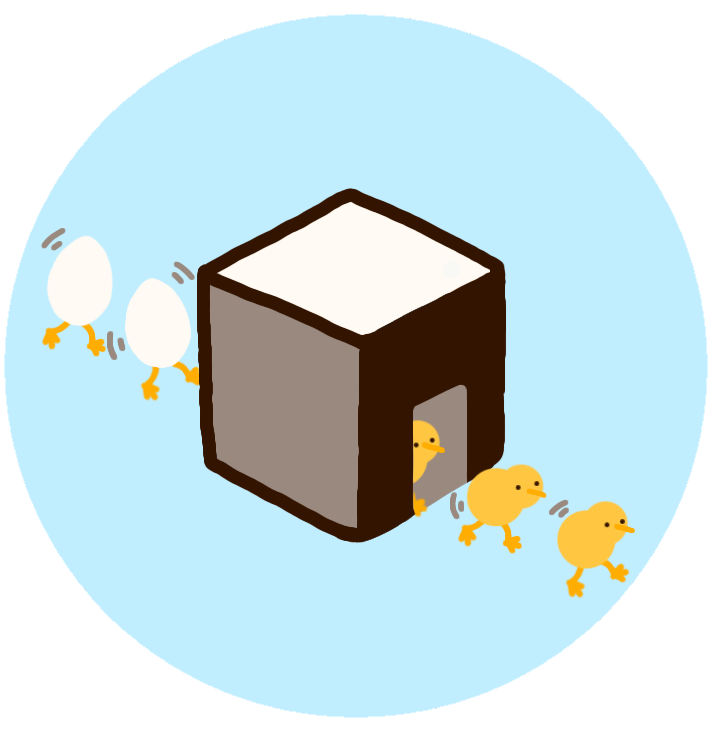
At sixteen, Callum kept a careful eye on what was current. He followed the right accounts, saved the right references, adjusted his drawings to match whatever seemed to be circulating most widely that week. His sketchbook filled quickly, but each page felt pretty much interchangeable with the last.
When he fell out of step - missing a day, lingering too long on an idea that had already passed - he tried to correct it. The work became faster, cleaner, and harder to distinguish.
One afternoon, without really deciding to, he stopped checking what was going on in the online world. He drew something else, built from things he liked months ago and things he wasn’t sure anyone liked at all. It didn’t look current. It didn’t look like anything he could easily place, but he kept going anyway.
The drawings changed - not all at once, and not always for the better, but enough that he could see the difference. They didn’t resolve as quickly but they kept him engaged for longer - and motivated.
When he eventually shared them, they didn’t spread the way his older work had, but he found people coming back to his work slowly, and commenting - offering encouragement.
Callum realised, gradually, that nothing had gone wrong. He hadn’t fallen behind, he had simply stepped out of a pace that was never going to let him stay with anything for very long.
There is a lovely freedom that comes with being considered out of step. Not outdated in the sense of irrelevance, but untethered from the urgency of the present moment. Falling out of step with what is current is often framed old fashioned or slipping behind but for creative work, it can be something closer to a release.
The contemporary landscape moves with such speed that participation alone can feel like a full-time obligation. Trends emerge, peak, and dissolve in cycles so compressed that even those circling within them struggle to keep pace. The pressure to remain legible within this constant soup and to produce work that signals awareness, alignment, and speed can narrow the field of possibility.
When everything must feel current, very little is allowed to feel deeply considered. Being ‘out of touch’ interrupts that cycle. It removes the expectation of relevance as defined by the zeitgeist. In doing so, it also removes the subtle but persistent demand to anticipate engagement. Work made from within the logic of trends is often shaped by an imagined audience that is itself unstable, and constantly shifting. When you are no longer trying to impress that audience, something else happens. The work can begin to follow its own path.
If the present is always merging into the next thing, then doing your own thing offers a different relationship to time. It allows for slowness, for repetition, for a revisiting of ideas that may no longer be fashionable but are not therefore exhausted. Creative decisions can be guided less by novelty and more by process and experimenting. What happens if this is pushed further? What if it is returned to, reshaped, or even misunderstood on purpose?
“There is a lovely freedom that comes with being considered out of step. Not outdated in the sense of irrelevance, but untethered from the urgency of the present moment. Falling out of step with what is current is often framed old fashioned or slipping behind but for creative work, it can be something closer to a release.”
This distance from what is current does not necessarily produce better work, but it can produce more honest work. Without the need to signal awareness of trends, there is less incentive to perform. The result is often uneven, occasionally unfashionable, messy, fun, different and individual.
There is a misconception that creativity thrives on constant exposure to what is new - exposure which can be homogenising. When everyone is drawing from the same immediate pool of references, spiky differences begin to flatten out. Obsolescence, by contrast, often implies a different archive. It might involve older tools, older ideas, or simply a different set of influences that have fallen out of circulation or favour.
Much of contemporary creative practice is entangled with systems that reward visibility, engagement, and growth. These systems tend to favour clarity, speed, and recognisability. Work that does not conform to these expectations is often overlooked or ignored. While this can be limiting in terms of reach, it can also be protective. Without the pressure to perform within these systems, there is more room for ambiguity, for difficulty, for ideas that do not resolve neatly.
None of this is to suggest that obsolescence should be pursued as a posture or aesthetic too - otherwise it also just becomes part of the current trend.
However, in its true form it can borrow from different eras without concern for coherence, combine methods that do not conventionally belong together, or ignore established formats altogether. Better work often comes from smashing two or three unmatched ideas together. The work may not always find an immediate audience, but it may find a more durable one - people who are less interested in what is current than in what is refreshing.
Obsolescence, then, is not the opposite of relevance. It is a different orientation toward it. Instead of chasing the present, it allows the present to pass by. What emerges is work that is less concerned with fitting in and more concerned with being timeless.
It allows for the sense that creativity does not have to accelerate in order to matter. That it can unfold at its own pace, drawing from wherever it finds resonance, and arriving at something that feels less like a response and more like a skill.
See below for how to take what appears to be two incongruous ideas and create something refreshingly new -
Thanks as always for reading - see you back here next week! 😊
“The tutor behind HatchEd was pivotal in my learning journey, guiding me through the creation and design of my first website. Her hands-on approach made learning enjoyable and directly applicable to the challenges one faces in the real world. Her insights were also crucial in helping me make informed decisions about the next steps in my education. I wouldn’t be a Product Designer if not for her invaluable guidance”